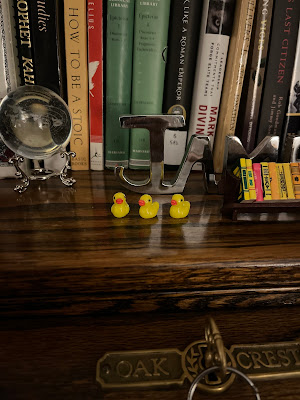
I’m an Action Figure!


“If the Superman is better than we, of course we need not fight him; but in that case, why not call him the Saint? But if he is merely stronger (whether physically, mentally, or morally stronger, I do not care a farthing), then he ought to have to reckon with us at least for all the strength we have. If we are weaker than he, that is no reason why we should be weaker than ourselves. If we are not tall enough to touch the giant’s knees, that is no reason why we should become shorter by falling on our own. But that is at bottom the meaning of all modern hero-worship and celebration of the Strong Man, the Caesar, the Superman. That he may be something more than man, we must be something less. Doubtless there is an older and better hero-worship than this. But the old hero was a being who, like Achilles, was more human than humanity itself. Nietzsche’s Superman is cold and friendless. Achilles is so foolishly fond of his friend that he slaughters armies in the agony of his bereavement. . . . The Man-God of old answers from his awful hill, ‘Was ever sorrow like unto my sorrow?’ A great man is not a man so strong that he feels less than other men; he is a man so strong that he feels more. . . . Sensibility is the definition of life.”
(G K Chesterton, Heretics, Chapter 5, “Mr. H G Wells and the Giants”)