Posts

Showing posts with the label thought

The Necklace

Image
  “SHE WAS one of those pretty, charming young ladies, born, as if through an error of destiny, into a family of clerks. She had no dowry, no hopes, no means of becoming known, appreciated, loved, and married by a man either rich or distinguished; and she allowed herself to marry a petty clerk in the office of the Board of Education. . . .  She had neither frocks nor jewels, nothing. And she loved only those things. She felt that she was made for them. She had such a desire to please, to be sought after, to be clever, and courted.” —THE NECKLACE Guy de Maupassant    France, 1884 (pic by Grok) Read this short story here:  https://americanliterature.com/author/guy-de-maupassant/short-story/the-necklace

Sentinel

Image
"Dreams, combat, terror, numbness or subservience--every day these things wipe out your sacred principles, whenever your mind entertains them uncritically or lets them slip in." (Marcus Aurelius, Meditations 10.9) Let nothing slip by without checking, for the old saying goes, "If the big things don't get you, the little ones will kill you." Don't let the little ones kill you, ok? As we move through a day our mind meets many uninvited guests. The difficulty is that we open the door and let the uninvited guests stay. We even sit them down and serve them dinner--something we would never do in "real life". These distractions, these influences are sly--sapping energy we should be using elsewhere. They push and pull until we find ourselves so far out in left field wondering how we wound up out there. Protect your mind, your principles by posting a Sentinel at the mind's gate. Here's how Commander Mark Divine DIRECTs mental traffic, as des...

State of Mind

Image
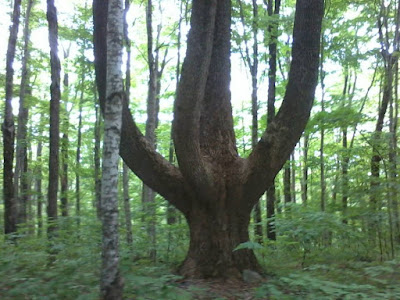
There's the difficult way and there's the really difficult way. The Black Crest Trail is the latter--but it's the most rewarding. Culminating on the highest peak on the Eastern Sea Board, the Black Crest Trail (aka, "Death March") clambers over five peaks. That is, if one approaches from the North. We passed many hikers going the opposite direction--downhill. But for every "down" there's an "up." Scaling the first 3000 feet in the first three miles, we passed this unforgettable tree. I was caused to remember this tree when reading my dailies: " Your mind will take the shape of what you frequently holds in thought, for the human spirit is colored by such impressions ." (Marcus Aurelius, Meditations, 5.16) On the trail I could not pass this tree as quickly and easily as the previous million. What forces shaped this tree? How long has it endured? One can only imagine. The truth is that the tree remains shaped,...

Give Yourself A Break!

Image
“Do not disturb yourself by picturing your life as a whole; do not assemble in your mind the many and varied troubles which have come to you in the past and will come again in the future, but ask yourself with regard to every present difficulty: 'What is there in this that is unbearable and beyond endurance?' You would be ashamed to confess it! And then remind yourself that it is not the future or what has passed that afflicts you, but always the present, and the power of this is much diminished if you take it in isolation and call your mind to task if it thinks that it cannot stand up to it when taken on its own.” Marcus Aurelius, Meditations ************ Currently Reading: 

"As a man thinks . . . "

Image
Proverbs 23:7 כִּי כְּמֹו־שָׁעַר בְּנַפְשֹׁו כֶּן־הוּא "For as he thinketh in his heart, so is he" (KJV) "For as he thinks within himself, so he is" (NASB) "for he is the kind of person who is always thinking about the cost" (NIV) "for he is like one who is inwardly reckoning" (RSV) "For as one that hath reckoned within himself, so is he" (Tanakh, 1917) "A man is what he thinks about all day long." (Ralph Waldo Emerson) "A man is but the product of his thoughts; what he thinks, he becomes." (Ghandi) “A man's mind may be likened to a garden, which may be intelligently cultivated or allowed to run wild; but whether cultivated or neglected, it must, and will, bring forth. If no useful seeds are put into it, then an abundance of useless weed seeds will fall therein, and will continue to produce their kind.” (James Allen)

Thoughts on Plato's "Euthyphro"

Image
What is “right”? What is “good”? How do you know if what you are doing is right? What is the measure of “good”? Age old problems, age old questions. Nearly four hundred years preceding the birth of Jesus, a Greek priest and a philosopher wrestled with these issues. Specifically, they discussed the matter of piety. What is piety? That’s the beauty of this conversation. Meeting at Magistrate court, the priest wondered what the philosopher was doing there. The philosopher explains he is being indicted for corrupting the younger generations by rejecting the state gods and replacing them with his own. [I can't resist posting a clip from one of most favorite movies of all time, ever, "Fun With Dick and Jane" . . . I could loop this movie and never tire of it.] Back to serious.  What was the priest doing in court? He is prosecuting his father for killing a man who killed another man. How does piety fit into all this? The priest feels he is able to press his case o...

It's Hard To Be The Pope If You Are The Soap.

Image
Lewis Carroll (1832-1898) gave us this ditty called "The Mad Gardener's Song." He thought he saw an Elephant That practised on a fife: He looked again, and found it was A letter from his wife. 'At length I realize,' he said, 'The bitterness of Life!' He thought he saw a Buffalo Upon the chimney-piece: He looked again, and found it was His Sister's Husband's Niece. 'Unless you leave this house,' he said, 'I'll send for the Police!' He thought he saw a Rattlesnake That questioned him in Greek: He looked again, and found it as The Middle of Next Week. 'The one thing I regret,' he said, 'Is that it cannot speak!' He thought he saw a Banker's Clerk Descending from the 'bus: He looked again, and found it was A Hippopotamus. 'If this should stay to dine,' he said, 'There won't be much for us!' He thought he saw a Kangaroo That worked a coffee-mill: He looked again, and found it was A Veget...

A Few Collected Statements on Reading and The Rational Mind

Some read just enough to keep themselves misinformed. (Amish proverb) The man is sure to go wrong in his thinking whose aim is to get for himself. (possibly H.L. Mencken) Merely having an open mind is nothing. The object of opening the mind, as of opening the mouth, is to shut it again on something solid. (G.K. Chesterton) There is no worse error than to seek intellectual remedy for moral grief. (Gaston Frommel) Beat not out thy brains to fathom the un-revealed. (Harold Will) It is not honking your horn that keeps you out of trouble as much as steering wisely. (Headline in the "Butter, Cheese & Egg Journal" July 12, 1922) Knowledge is power under three conditions: if it is knowledge of things worth knowing; if it is known by a person worthy of using it; if it be used. (anon) A brain is as strong as its weakest think. (Thomas Masson) Hell hath no fury like a zealot trying to prove a theory. (anon) True wisdom is seldom gained without suffering. (Sir Arthur Help...

Think About

“The man who thinks he knows all the answers is either not a Christian at all or a Christian with a very defective sense of the mystery and wonder of his faith.” (Casserly, Langmead. Man’s Pain and God’s Goodness. Mowbray: London, 1951. P. 14)

Start At The End?

Image
You know that moment somewhere between “asleep” and “awake” when you have the feeling you suddenly understand life, the Universe and everything? I have an idea about that moment, and am interested in your thoughts if you will follow me: but first . . . When does your day begin? Midnight? Sunrise? Sundown? I’ve been pondering the Jewish concept of the day beginning at sundown and wonder if there is a simple basic principle that the follower of Christ and lover of God should examine and put into practice. Why say we start the day when the sun goes down? If we did not have electricity, sundown would be the time we clean up and go to bed. Presently we extend our bedding down until much, much later in the evening, but we still sleep at night (then complain about how little sleep we get). How does a day begin when we are not active? Our day begins in the light, with activity which carries on until the sun goes down at which time our day ends. We lay down to sleep and we are most vu...

Proof Is Not Enough

Reason is able to confirm the existence of God by consideration of the birds of the air and lilies of the field (as it were); however, reason alone fails to comprehend the person and things of God Himself. We see evidence that He Is, but we cannot know Him by mere reason alone in the same way that a building gives evidence to a builder, but gives the admirer no personal knowledge of the builder. We can’t prove the existence of God. We can only point to the evidence of The Creator (more in this in a moment). Yet, God desires to reason (not dialogue nor debate, but to settle on His terms) with man who is in rebellion against Him (Isaiah 1:10-20). This is doing theology: practicing true science (applying unbiased knowledge), and pure philosophy (transforming the mind mind, using discretion, enlarging the world beyond personal interest) to fulfill God’s purpose for us and bring Him glory that is all His. When the follower of Christ and seeker of God rub shoulders with the world, we fi...

Think

"The Bible is full of logic, and we must never think of faith as something purely mystical. We do not just sit down in an armchair and expect marvelous things to happen to us. That is not Christian faith. Christian faith is essentially thinking. Look at the birds, think about them, and draw your deductions. Look at the grass, look at the lilies of the field, consider them. The trouble with most people, however, is that they will not think. Instead of doing this, they sit down and ask, What is going to happen to me? What can I do? That is the absence of thought; it is surrender, it is defeat. Our Lord, here, is urging us to think, and to think in a Christian manner. That is the every essence of faith. Faith, if you like, can be defined like this: It is a man insisting upon thinking when everything seems determined to bludgeon and knock him down in an intellectual sense." --D. Martin Lloyd Jones. Studies in the Sermon on the Mount .

"The Apologists’ Evening Prayer" by C.S. Lewis

I am personally not a huge “drop everything” fan of C.S. Lewis, but I do appreciate many of his contributions. This sonnet goes nearly unnoticed and unmentioned of his writings: From all my lame defeats and oh! much more From all the victories that I seemed to score; From cleverness shot forth on Thy behalf at which, while angels weep, the audience laugh; From all my proofs of Thy divinity, Thou, who wouldst give no sign, deliver me. Thoughts are but coins. Let me not trust, instead of Thee, their thin-worn image of Thy head. From all my thoughts, even from my thoughts of Thee, O thou fair Silence, fall, and set me free. Lord of the narrow gate and the needle's eye, Take from me all my trumpery lest I die. Lewis’ transparency is staggering, for here he presents to the world the weakness of his argument: himself. Recall that apologetics is defending the faith, and here C.S. Lewis confesses that every flaw in speaking on behalf of The Almighty lies with himself. Winning an argumen...

"I don't know enough to be a Christian."

Image
"God is not so cruel as to have left us in the miserable plight that the most saving and necessary truths have to be laboriously assembled by everyone for himself. We are not a lot of amatteur detectives on the hunt for clues in a cosmic whodunit." Would God be so unloving, unkind and unjust to have given faith only to intellectuals? Blamires, Harry. The Christian Mind . S.P.C.K.: London, 1963 ************

Sir John Davies on, "The Intellectual Powers of the Soul"

There is a saying, “favor is the currency of God.” If favor were the result of fate or destiny then due to the impersonality of fate or destiny, favor becomes meaningless. If favor were the outcome of a game or even good deeds, then favor would be a wage. Favor is the “currency” of God, a blessing. The life of Sir John Davies (1569 - 1626), the English Renaissance lawyer and parliamentarian under Queen Elizabeth (and late contemporary of Sir Philip Sidney) is a wonderful illustration of one who received this blessing. Davies wrote and published in 1599 a book called Nosce Te Ipsum , or “Know Thyself.” When Davies was presented to King James (yes, the same King James of the 1611 Bible) Davies was already a favorite of Queen Elizabeth. When King James inquired if the man before him was the author of the Nosce Te Ipsum , the King "embraced him and conceived a considerable liking for him." Davies was later appointed to be Solicitor General for Ireland when he was knighted in 1...

Glory to God in the Highest Thought, part 2

As my pastor says, "let's go back to the top" and consider how grade one thinking from the highest pinnacle of thought actually informs man's situation. It can be said theologically that “anthropology is the study of man” in terms of a literal definition. Man’s creation, existence and purpose has only one logical explanation in the person of God, the uncreated Creator. The Scriptures clearly and distinctly teach that God created man, that he is the result of an act of immediate divine creation. Asking the question, "how can we trust God’s perspective as recorded in the Bible?" moves us from level two to level one thinking, demonstrating we are pursuant of truth. First, the Bible can be trusted because it introduces and contains certain, verifiable history. Second, quotes itself and is quoted by people throughout history as being true. Third, the facts recorded in the Bible, including the creation and probation of man, lie at the foundation of God’s whole...

Glory to God in the Highest Thought, part 1

William Golding is best known for his novels "The Lord of the Flies," “Free Fall” and the sea trilogy "Rites of Passage," “Close Quarters” and “Fire Down Below.” Golding should have received greater recognition for his essay, "Thinking as a Hobby." Here Golding helps the reader understand how he came to the conclusion that there are three grades, or categories of thinking. Grade three thinking is "feeling, rather than thought," much like animal instinct and as equally reactionary. This is the thinking grade of addictive behavior, hedonists and Jedi Knights. Grade two thinking "destroys without having the power to create;" that is, while grade two thinking may enjoy discovering and pointing out contradiction, it provides no answers, solutions or security. This is the thinking grade of humanistic science, philosophy, anthropology, sociology, and psychology. The danger of grade two thinking can be compared with the undertow, which drags th...

What Einstein Thought

"With the discovery of the atom, everything changed, except for man's thinking. Because of this, we drift toward unparalleled catastophe." "The true problem lies in the hearts and thoughts of men. It is not a physical but an ethical one . . . . What terrifies us is not the explosive force of the atomic bomb, but the power of the wickedness of the human heart." (Albert Einstein, 1879 - 1955)

Decisions, decisions

There are at least two sides to every question, just as there are two sides to a sheet of flypaper--it makes a big difference to the fly which side he chooses.

Being Open-minded: Priceless

An open mind is priceless only when it's owner has the courage to make a final decision, which in turn, closes the mind after all sides of the question have been viewed and considered. Remember: compromise is changing the question to fit an answer.

How do I know if an idea is from God or from myself?

Image
A note from France reads: "How to know that idea is from God or by myself?" or "when something comes up or happens, how [is one] to know that 'this something' is God's will or from my thinking?" This is a very deep question and may not be easily resolved in one reply, but here is an attempt: ************ I think we have a clue in Isaiah 55:8, " For My thoughts are not your thoughts, nor are your ways My ways," declares the LORD ." Think of a prisoner who has the freedom to pace up and down in his cell, but he must stay within the walls of that cell and can go no further, no matter how much his will might desire it. So it is with man. Because of sin, man is imprisoned within a cell of corruption and wickedness which permeates to the very core of our being. Every part of man is in bondage to sin – our bodies, our minds, and our wills. Jeremiah 17:9 tells us the state of man’s heart: it is “ deceitful and desperately wicked. Who can know it? ...