Posts
Showing posts with the label book review
"On Keeping A Notebook" by Joan Didion
- Get link
- X
- Other Apps
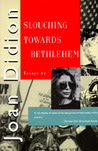
I'm nearly finished reading Joan Didion's collection of essays, Slouching Towards Bethlehem. The book was discovered through another book I was reading, Jon Krakauer's Eiger Dreams . If Jon felt this book was good enough to pack along on a mountain climbing expedition, then I'm interested. Took me three tries, but I finally found my copy on Amazon. One of the best book buys I've made. Joan selected the title of this book from William Butler Yeats' classic poem, Second Coming . The book title is shared with one of her larger essays, a record of encounters with people in the 1960's drug culture. Didion's book is divided into three distinct parts: "Life Styles In The Golden Land," a collection of articles capturing the California experience of the 1960's; "Personals," a few of essays of the first-hand nature; and "Seven Places Of The Mind", some thoughts about those parts of California that are now long gone. One essay...
"Blue Highways" Book Review
- Get link
- X
- Other Apps
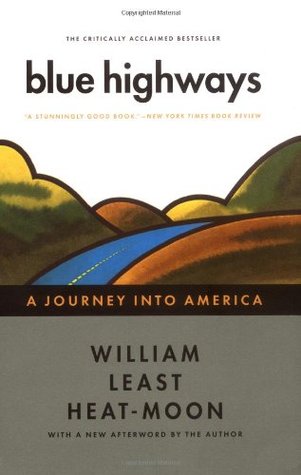
Greatly enjoyed this book, the first of three in a travel series. Sure, it's dated by now (first published in 1982), but it's interesting to use this as a landmark of sorts, to mark how things have changed over the years--and how some things never seem to change. Felt very much "along for the ride" in his van, "Ghost Dancing." His periods of insight and reflection were refreshing from the sense that here's a man who made a trip--he did not simply take one. In solitude, he thought and in writing, he shares many introspective discoveries. These were the best parts of the trip in reading the book; however, of all the place and people Heat-Moon meets, he seems to be followed by the "same cast of characters" (as it were). No matter where he visits, everyone speaks with the author's voice, with the same kind of whit and humor. Occasionally he seems to be condescending or takes a mocking tone but one could chalk that up to road-weariness....
Best Book of 2016
- Get link
- X
- Other Apps
Happy New Year! The start of a new year signals for many the opportunity to do something different. Why not step over your personal boundaries, explore and expand your potential? MORE THAN PHYSICAL TRAINING Commander Mark Divine has compiled a program that will help you discover who you are, challenge and grow the way you think as well as develop your mental, emotional and physical strength in this carefully constructed program. Click graphic for more information. The Navy Seals are not a force to be taken lightly, and neither should this program. Following the daily regimen set forth by Commander Divine, one is transformed into a stronger person. One week of introductory training lays the foundation for one week each of baseline training, building strength and stamina then culminates in one week of "work capacity"--and this is the first four weeks. One does not simply "work out," but trains in areas that have real applications in daily life ranging from pe...
Book Review: "Shepherding Horses"
- Get link
- X
- Other Apps
Humphreys, Kent. Shepherding Horses: Understanding God’s Plan for Transforming Leaders . Oklahoma City: Lifestyle Impact Ministries, 2010 Humphreys builds this leadership book on an allegory designed to narrow the field of influence concerning leaders. He proposes that within the flock for which the pastor is responsible as shepherd, horses have infiltrated. These horses are for Humphreys symbolic of strong workplace leaders within the church--and these leaders must be tamed. Humphreys begins by asking “What did Jesus do?” as the perfect shepherd. He proposes that horses are trained when they respond to the gospel, understand God’s principles, work, reproduce and relate to the Father. He continues by building on a vision that he suggests will transform cities and churches. The principle hinges on the the way leaders are equipped as ambassadors through relationships, understanding each other contextually and affirmation. The allegory on which the premise of the book is buil...
Book Review: "A Catalog Of The Ways People Grow" by Severin Peterson
- Get link
- X
- Other Apps
Peterson, Severin. A Catalog Of The Ways People Grow. New York: Ballentine, 1971. (I read old books because there are there) The most likeable feature of this 367 page encyclopedia is the rare and painfully honest assessment Peterson gives to the reader of his own collection. He suggests, “that you regard this book as being a manure spreader, that all the words in this book are, at best, manure, and that this book is a vehicle for spreading manure . . . . As you read this book, you can, if you like, be spreading manure. If you leave it on the ground, it will smell a little and then dry up.” So how can one be not just a little curious? Peterson goes on to describe the benefits of manure to a garden, but this is truly less a catalog of the fruits of a productive garden so the title does not fit the analogy. The book is an alphabetical arrangement of worldview; that is, ways man tries to understand the self and the world in which he lives. Certainly one would expect to f...
Book Review: "The Lost Sutras of Jesus"
- Get link
- X
- Other Apps
Reigert, R. and Moore, T. The Lost Sutras of Jesus: Unlocking the Ancient Wisdom of the Xian Monks. Berkeley: Seastone, 2003. I read this short book sporadically then had a conversation with colleague, whose comments in context with his personal background caused me to go back and read the book again. When describing this book to him, this wise man spoke of challenges faced by Chinese Christians to this day; that is, the assimilation of Buddhism with teachings of Christianity. This book described the source of the challenge that, in effect, is centuries old. Moore and Reigery present the history, teachings and suggested meanings of a set of ancient Chinese scrolls containing spiritual teachings, a section of which is presently referred to as “The Jesus Sutras.” While this book would make it good “coffee table” read, some key elements are lost by it’s conciseness. For example, “sutra” is never defined so a good reader would be well served to find the Buddhistic applica...
Book Review: "Living On the Edge: Dare To Experience True Spirituality" by Chip Ingram
- Get link
- X
- Other Apps
Ingram, Chip. “ Living On The Edge: Dare To Experience True Spirituality .” New York: Howard Books, 2009. Spirituality is not as open-ended as many imagine and the reason is found around the one around whom spirituality is centered. Spirituality and discipleship are inseparable, flowing out of a relationship with the living truth. Relationship leaves no room for religion and true spirituality is the practice of those who follow with transformed minds. Ingram’s 268 page book is divided into five “How To” sections with five accompanying chapters, by topic and subtopic, taking the reader by the hand through ground-level explanation of the Christian life through Romans 12. The sections follow through the teaching of Romans, verse by verse though unlike a commentary, the teaching is simple: “How to Give God What He Wants the Most (Romans 12:1)”: Surrendering to God “How to Get God’s Best For Your Life (Romans 12:2)”: Separate from the world “How To Come to Grips wit...
Book Review: "INsourcing" by Randy Pope
- Get link
- X
- Other Apps
Randy Pope states the focus of his book is to share lessons learned that changed the ministry of his church (Introduction, page 16). Pope spends the twelve chapters and four appendices (with notes) introducing and developing a hybrid-model of church that addresses the individual, providing context and elements for necessary equipping and maturity to express and apply the gospel globally. Pope communicates a person-centered approach to being and doing church with no discussion or explanation of what constitutes the foundation of the church (for example 1 Corinthians 3:10 is offered with no explanation or teaching) nor does he point to the head of the church, who is Christ. The purpose of the church is mentioned only in passing in preference for assuming a different purpose, which becomes an elusive target to be discovered the developed by experience. Once identified, business and marketing strategy integrated with theology becomes the modus operandi. While it is clear this...
Book Review: "Breakthrough Prayer" by Jim Cymbala
- Get link
- X
- Other Apps
[I read old books because they are there.] Cymbala, Jim. "Breakthrough Prayer: The Secret of Receiving What You Need From God.” Grand Rapids: Zondervan, 2003. This twelve chapter book is an excellent follow-up to Cymbala’s book, “Fresh Wind, Fresh Fire.” Cymbala begins by establishing God’s blessing as a reflection of his love for all creation, mankind especially. God’s blessing is to be pursued, requested fervently and is apprehended in direct connection with diligent study of the Bible. Once we understand what God’s Word says, then we can be practice obedient faith. Since God is present and at work, His answer to prayer involves our participation with God to accomplish His purposes and this often means we must come to the end of ourselves. There is an attitude of desperation that drives us to call on Him but the subsequent blessing of His answer. Fear or danger drives us to pray, so the principle is that God shows mercy in answer to any prayer. The battles we face s...
Book Review: "Clockwork Angels" by Kevin J. Anderson and Neil Peart
- Get link
- X
- Other Apps
This is not a typical book review for the book actually began with an album, so one finds it difficult to talk about one to the exclusion of the other. “Clockwork Angels” began as the concept album (released June 12, 2012) by the band Rush. Lyricist and drummer Neil Peart teamed with novelist Kevin Anderson to produced this thought-provoking adventure based on lyrics from the band’s 19th album. The cover art (below) is shared between album and book and displays layers of intrigue. Fans of the band will understand without explanation the meaning of “2112,” noting the time indicated on the clock-face (in military time). The symbols on the cover refer to the chemicals of alchemy, but not alchemy in the classical sense. This alchemy is the powersource for a steam-punk world. Musically, the band surprises the listener with some bold adventures into genre not often associated with Rush. They are loud with style in all the right places. The contrasting softer passages demonstr...
Pre-Book Review: "An Incomplete Education" by Judy Jones and William Wilson
- Get link
- X
- Other Apps
Uncle John’s Bathroom Reader has a contender! Just found a book I am going to review it before I actually read it. Judy Jones and William Wilson (there’s an education in that name--calling to mind Edgar Allan Poe--which hints as to why a book like this can be fun) published this third edition in 2009 with Ballantine. The book covers highlights in twelve subject areas that we either forgot or slept through in school: American Studies, Art History, Economic, Film, Literature, Music, Philosophy, Political Science, Psychology, Religion, Science and World History. Browsing the book, one notes witty writing in short articles. Even the Lexicon presents itself to be a readable 13th chapter. 10,000 years in only 700 pages. I expect plenty of springboards for future blogs to be found within!
Book Review: "The Air I Breathe [Worship As A Way of Life]"
- Get link
- X
- Other Apps
[I read old books because they are there] Louie Giglio’s book, “The Air I Breathe [Worship As A Way of Life]” (2003) is well, a breath of fresh air, considering the number of contemporary books available on the subject. This 122 page book (consisting of 11 chapters plus questions for group discussion) fits nicely in just about any pants pocket or purse. If you’ve enjoyed any of Louie’s talks, this will be a nice refresher. Louie begins with a captivating question then goes beyond any typical answer, demonstrating “why worship matters” and the cost of worship--both for Him and for we who worship. Here, Louie proves that worship begins not with the one who worships, but with the object of worship; that is, worship is our response to God. “When God is not greatly praised, it’s only because we don’t think He’s that great of a God. When our worship is small, it’s because our concept of God is small. When we offer God little-bitty sacrifices, it’s because we’ve somehow reduced Him i...
Book Review: "The Abolition of Man," by C.S. Lewis
- Get link
- X
- Other Apps
One may wonder, “why do a book review on a book originally published in 1947?” The book to which I refer is by C.S. Lewis, “The Abolition of Man; or, Reflections on Education with Special Reference to the Teaching of English in the Upper Forms of Schools” (New York: MacMillan, 1978). One answer may be the fact that the 121 page book is still in circulation. Another answer may be likened unto climbing a mountain--because the old thing is there--and this unassuming book is a mountain. This reader recalls journeys up into the Rocky Mountains and the discovering the elusive nature of the summit. Climb, climb, climb, look up, reach the top only to find one has not summited but only acquired the lip of a terrace with another false peak looming overhead. Lewis give us three such chapters (plus an appendix) that lifts the reader up into the clouds of the author’s deep reflections (perhaps a descending metaphor should be more fitting)--heady reflections. This venture is no small hike. The firs...
Book Review: "Fresh Wind, Fresh Fire" by Jim Cymbala
- Get link
- X
- Other Apps
Cymbala, Jim. “Fresh Wind, Fresh Fire.” Michigan: Zondervan, 1997 [I read old books because they are there] This short anecdotal book is required reading. Rationale: there is as much prayer in churches as in public schools. Godly men and women call on the name of the Lord. This is the main teaching Pastor Cymbala’s book, built on the root principle found in Genesis 4. God’s people identified early in scripture as being “those who call on the name of the Lord.” The ungodly do not call on the name of the Lord (Psalm 14:4). Prayer defines who are as as obedient children of God. Prayer shows that we take God seriously, believing Him. Prayer is central to our worship, the hallmark of the place in which we worship; but, we have become complacent with much, much less. The church is missing the spiritual connection and needs to get plugged back into the power source. Cymbala’s scriptural applications both admonishes and encourages to stretch our hands and call out to God, who will respond t...
Book Review: "How to Think About God: A Guide for the 20th-Century Pagan"
- Get link
- X
- Other Apps
Adler, Mortimer J. “ How to Think About God: A Guide for the 20th Century Pagan .” New York: Simon and Schuster, 1980. [why read old books? Because they are there] The famed author of " How to Read A Book " helps us think about God. Adler’s central proposition is there exists an interest in the question of God’s existence and some are willing to consider the question; however, the author admits, “the God that is the object of pagan philosophical thought is not the God of Abraham, Issac, and Jacob, or of Moses, Jesus and Mohammed.” In other words, the pagan decides who God is. Is this possible? Adler divides his book into six major sections populated with two to three chapters per section. The first section serves as an extended prologue where the author explains himself to his intended audience across two chapters. The second section discusses errors to be avoided. Section three (the longest section) sets the stage for the discussion of “God”, followed by the section examin...
Anti-Book Review
- Get link
- X
- Other Apps
One downfall to being a bibliophile and active reader is that I like to read what others are reading because I have developed this strange desire to know what shapes thought. Reading becomes quite enjoyable, yet reading can become overwhelming--especially when I encounter a good quote, such as the twoI am about to share. Footnotes, bibliographies and "for futher reading" sections can be are quite destructive to my personal reading list. I don't even know why I have one as it keeps growing and growing and growing . . . Regardless, here are a couple of thoughts that are going to drive me to pick up yet another book, hence the name of this post "Anti-Book Review." Perhaps the best name should be "Book Anti-review" because I have not read the book yet. I am not anti-books, just the ones that increase my "to read" list. ;-) Here's the book I've yet to read: "The Divine Conspiracy" by Dallas Willard. Here are the two quot...
Be Intolerant
- Get link
- X
- Other Apps
Stumbled across this book and just had to read it. “ Be Intolerant Because Some Things Are Just Stupid ” by Ryan Dobson is an older book (Multnomah, 2003) that can be read in one sitting, but the premise is worth a lifetime of consideration. It’s up to you. This is actually a simple definition of moral relativism, a worldview that, when taken to its logical conclusion, is actually quite illogical and self-defeating. Moral relativism mixes well with nothing. Many don’t like to use the term “moral relativism” but can be heard to refer to “tolerance,” which is “the virtue of those who believe nothing.” (p. 36). The first chapter identifies the problem raging at epidemic proportions, making the point that “tolerance” is a TUMOR and should be addressed, even removed as if with radical surgery. The TUMOR looks like this: we live in a culture where good feelings rule, so do what you want as long as nobody gets hurt; however, whatever you do, be untraditional even if it means someone gets o...
“The Cello Suites: J. S. Bach, Pablo Casals, and the Search for a Baroque Masterpiece”
- Get link
- X
- Other Apps
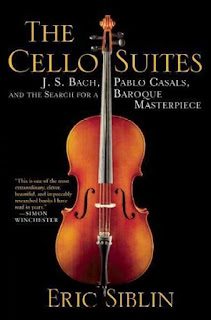
Eric Siblin’s book “The Cello Suites: J. S. Bach, Pablo Casals, and the Search for a Baroque Masterpiece” set me free. Siblin composes a history of Bach’s six Cello Suites that does not merely impart information, but cultivates a deep(er) appreciation for The Master and his masterwork that was nearly lost. Taking his cue from Bach, Siblin divides his book into six chapters (one for each movement) with their respective preludes, allemandes, courantes, sarabandes, minuets, bourees or gavottes and concluding gigues. He explains how, “Bach will occupy the first two or three movements of each suite. The dances that come afterward or earmarked for Pablo Casals. And the gigues that close each suite will be reserved for a more recent story . . . “ (p. 9) While this framework helps the reader capture the mood of each suite, the writer also (perhaps unwittingly) delivers history in a manner that helps the non-cellist grasp the experience of actually playing. The Chord, utilized by Bach thr...
"God Has No Dumb Children"
- Get link
- X
- Other Apps
There is no better way to summarize J.C. Ryle’s 28 page tract, “ A Call to Prayer ” than with this remarkable sentence found in the second section of this monumental tract: “God has no dumb children.” Divided into nine sections, Ryle centers the subject concerning prayer on Paul’s comment to Timothy, “I will that men pray everywhere” (1 Timothy 2:1) and keeps one question ever before the reader’s eye: “Do you pray?” Ryle begins with “Prayer is Needful to a Man’s Salvation.” Here we first encounter the question, “Do you pray?” with the understanding that “whether you pray in private or not is a matter between yourself and God.” Prayer is the way one asks of God, regardless of geography, education or physical condition—and every person is responsible to pray. Ryle identifies those who pray as children of God, and “God has no dumb children. It is as much a part of their new nature to pray, as it is of a child to cry.” Those who do not pray prove themselves to be unfeeling of sin; out o...
"The Problem of Pain" by C.S. Lewis (part 1)
- Get link
- X
- Other Apps
[This is will not be a book review per se, but more of a lengthy interaction and summation, spread out over a number of posts--bite-size and eaily digestable portions of this challenging book.] Lewis explains the purpose of his book, The Problem of Pain , as being a solution to “the intellectual problem raised by suffering.” Lewis expresses his personal feeling in the preface that he has nothing to offer his readers “except my conviction that when pain is to be borne, a little courage helps more than knowledge, a little human sympathy more than much courage, and the least tincture of the love of God more than all.” This is perhaps the best summary of the book, humbly presenting both problem and solution with such little complexity. Lewis dedicates the introductory matter of the first chapter to building the framework concerning the rationale of religion (“awe,” generally speaking) through four elements: existence of Presence (the “numenous”) which through the fear of uncer...