HEAD(hed), (n.) 1. the top part of the human body or the front part of an animal where the eyes, nose, east and mouth are. "Your brain is in your head." DIBS(dibz), (n.) 2. a thick, sweet syrup made in countries of the East, especially the Middle East, from grape juice or dates. [Arabic "debs"]--World Book Dictionary, 1976.
Starting chapter 10 exhausted. Need to take a break. The closer to the end I get, the steeper the climb, as it were. Just gets harder near the end. I’m having eye surgery consultation later this week. I’m thinking the eye strain is too much for this little pea brain. Everything jumbles together. But so excited this is happening!
Get link
Facebook
X
Pinterest
Email
Other Apps
Seneca, The Moral Letters (Introduction) and Moral Letter 1: On Saving Time
Get link
Facebook
X
Pinterest
Email
Other Apps
-
Of all the screen shots in the world, YouTube had to pick that one.
smh.
"[S]et yourself free for your own sake; gather and save your time, which till lately has been forced from you, or filched away, or has merely slipped from your hands. Make yourself believe the truth of my words—that certain moments are torn from us, that some are gently removed, and that others glide beyond our reach. The most disgraceful kind of loss, however, is that due to carelessness. Furthermore, if you will pay close heed to the problem, you will find that the largest portion of our life passes while we are doing ill, a goodly share while we are doing nothing, and the whole while we are doing that which is not to the purpose." (Seneca, Letters 1)
CORRECTIONS
Two errors in the video:
1) I incorrectly stated the letter was written in Greek. After reading Epictetus in Greek last month, my mind did not "make the jump" to Latin, the language of the letter.
2) I incorrectly dropped Epictetus' name as the writer. See #1
One probably wonders what I’m working on. As an Independent Scholar, as I am not attached to a University, I am writing a commentary on the first book of a personal journal written by a 2nd Century Roman Emperor. In that book he lists 16 names and describes what each person contributed to his life. That’s the short version. I’ve covered the first 8 so far and hit a wall. Now I’ve gone back and am editing Chapters 1-3 to keep my mojo going. Not sure when I’ll be done but hopefully by years’ end. I already have another project lined up.
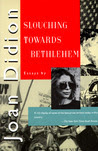
I'm nearly finished reading Joan Didion's collection of essays, Slouching Towards Bethlehem. The book was discovered through another book I was reading, Jon Krakauer's Eiger Dreams . If Jon felt this book was good enough to pack along on a mountain climbing expedition, then I'm interested. Took me three tries, but I finally found my copy on Amazon. One of the best book buys I've made. Joan selected the title of this book from William Butler Yeats' classic poem, Second Coming . The book title is shared with one of her larger essays, a record of encounters with people in the 1960's drug culture. Didion's book is divided into three distinct parts: "Life Styles In The Golden Land," a collection of articles capturing the California experience of the 1960's; "Personals," a few of essays of the first-hand nature; and "Seven Places Of The Mind", some thoughts about those parts of California that are now long gone. One essay...