“How Came I Hither?”

Image
  “I observed in the herbage a number of weather-worn stones, evidently shaped with tools. They were broken, covered with moss and half sunken in the earth. Some lay prostrate, some leaned at various angles, none was vertical. They were obviously headstones of graves, though the graves themselves no longer existed as either mounds or depressions; the years had leveled all. Scattered here and there, more massive blocks showed where some pompous tomb or ambitious monument had once flung its feeble defiance at oblivion. So old seemed these relics, these vestiges of vanity and memorials of affection and piety, so battered and worn and stained—so neglected, deserted, forgotten the place, that I could not help thinking myself the discoverer of the burial-ground of a prehistoric race of men whose very name was long extinct. Filled with these reflections, I was for some time heedless of the sequence of my own experiences, but soon I thought, “How came I hither?”” An Inhabitant of Carcosa B...

Seneca, Moral Letter 14, “On Reasons for Withdrawing from the World”


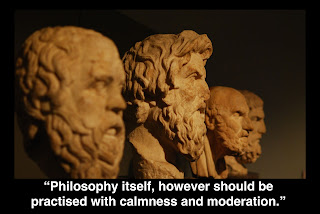
“One must therefore take refuge in philosophy; this pursuit, not only in the eyes of good men, but also in the eyes of those who are even moderately bad, is a sort of protecting emblem. For speechmaking at the bar, or any other pursuit that claims the people's attention, wins enemies for a man; but philosophy is peaceful and minds her own business. Men cannot scorn her; she is honoured by every profession, even the vilest among them. Evil can never grow so strong, and nobility of character can never be so plotted against, that the name of philosophy shall cease to be worshipful and sacred.” (Seneca, Moral Letter 14, “On Reasons for Withdrawing From the World)

Popular posts from this blog

Rock Me, Epictetus!

The Smooth-flowing Life