The Hellfire Club

Image
  “Just past the weir (going up) is Danes’ Field, where the invading Danes once encamped, during their march to Gloucestershire; and a little further still, nestling by a sweet corner of the stream, is what is left of Medmenham Abbey.   The famous Medmenham monks, or “Hell Fire Club,” as they were commonly called, and of whom the notorious Wilkes was a member, were a fraternity whose motto was “Do as you please,” and that invitation still stands over the ruined doorway of the abbey. Many years before this bogus abbey, with its congregation of irreverent jesters, was founded, there stood upon this same spot a monastery of a sterner kind, whose monks were of a somewhat different type to the revellers that were to follow them, five hundred years afterwards.  The Cistercian monks, whose abbey stood there in the thirteenth century, wore no clothes but rough tunics and cowls, and ate no flesh, nor fish, nor eggs. They lay upon straw, and they rose at midnight to mass. They spen...

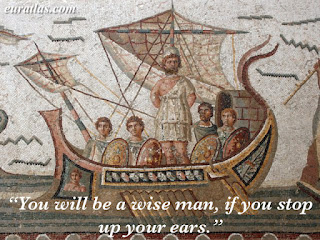
Seneca, Moral Letter 32, “On Siren Songs”


“. . . you need a denser stopple than that which they say Ulysses used for his comrades. . . the song, however, which you have to fear, echoes. . . from every quarter of the world.


What then is good? The knowledge of things. What is evil? The lack of knowledge of things. . . . 


And besides this, in order that virtue may be perfect, there should be an even temperament and a scheme of life that is consistent with itself throughout; and this result cannot be attained without knowledge of things, and without the art which enables us to understand things human and things divine. That is the greatest good. . . . . 


Your money, however, will not place you on a level with God; for God has no property. Your bordered robe will not do this; for God is not clad in raiment; nor will your reputation, nor a display of self, nor a knowledge of your name wide-spread throughout the world; for no one has knowledge of God . . . for this God of whom I speak, though the highest and most powerful of beings, carries all things on his own shoulders.” (Seneca, Moral Letter 31, “On Siren Songs”)

Popular posts from this blog

Rock Me, Epictetus!

The Smooth-flowing Life