HEAD(hed), (n.) 1. the top part of the human body or the front part of an animal where the eyes, nose, east and mouth are. "Your brain is in your head." DIBS(dibz), (n.) 2. a thick, sweet syrup made in countries of the East, especially the Middle East, from grape juice or dates. [Arabic "debs"]--World Book Dictionary, 1976.
Starting chapter 10 exhausted. Need to take a break. The closer to the end I get, the steeper the climb, as it were. Just gets harder near the end. I’m having eye surgery consultation later this week. I’m thinking the eye strain is too much for this little pea brain. Everything jumbles together. But so excited this is happening!
Get link
Facebook
X
Pinterest
Email
Other Apps
Sentinel
Get link
Facebook
X
Pinterest
Email
Other Apps
-
"Dreams, combat, terror, numbness or subservience--every day these things wipe out your sacred principles, whenever your mind entertains them uncritically or lets them slip in." (Marcus Aurelius, Meditations 10.9)
Let nothing slip by without checking, for the old saying goes, "If the big things don't get you, the little ones will kill you." Don't let the little ones kill you, ok?
As we move through a day our mind meets many uninvited guests. The difficulty is that we open the door and let the uninvited guests stay. We even sit them down and serve them dinner--something we would never do in "real life". These distractions, these influences are sly--sapping energy we should be using elsewhere. They push and pull until we find ourselves so far out in left field wondering how we wound up out there.
Protect your mind, your principles by posting a Sentinel at the mind's gate. Here's how Commander Mark Divine DIRECTs mental traffic, as described in his book "The Way Of The Seal":
Detect the thoughts that slip in--they never stop. Interdict, forbid useless thoughts, distractions, negativity. Redirect to new thoughts, with intentionality. Energize new thoughts by supporting with your whole being. Communicate right thinking by saturation in the truth. Train the mind to be strong.
This fellow gives a summative presentation one might find helpful. Watch from 3:40 or enjoy its entirety:
One probably wonders what I’m working on. As an Independent Scholar, as I am not attached to a University, I am writing a commentary on the first book of a personal journal written by a 2nd Century Roman Emperor. In that book he lists 16 names and describes what each person contributed to his life. That’s the short version. I’ve covered the first 8 so far and hit a wall. Now I’ve gone back and am editing Chapters 1-3 to keep my mojo going. Not sure when I’ll be done but hopefully by years’ end. I already have another project lined up.
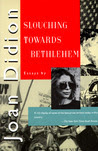
I'm nearly finished reading Joan Didion's collection of essays, Slouching Towards Bethlehem. The book was discovered through another book I was reading, Jon Krakauer's Eiger Dreams . If Jon felt this book was good enough to pack along on a mountain climbing expedition, then I'm interested. Took me three tries, but I finally found my copy on Amazon. One of the best book buys I've made. Joan selected the title of this book from William Butler Yeats' classic poem, Second Coming . The book title is shared with one of her larger essays, a record of encounters with people in the 1960's drug culture. Didion's book is divided into three distinct parts: "Life Styles In The Golden Land," a collection of articles capturing the California experience of the 1960's; "Personals," a few of essays of the first-hand nature; and "Seven Places Of The Mind", some thoughts about those parts of California that are now long gone. One essay...