"When any person does ill by you, or speaks ill of you, remember that he acts or speaks from an impression that it is right for him to do so. Now, it is not possible that he should follow what appears right to you, but only what appears so to himself. Therefore, if he judges from false appearances, he is the person hurt; since he too is the person deceived. For if any one takes a true proposition to be false, the proposition is not hurt, but only the man is deceived. Setting out, then, from these principles, you will meekly bear with a person who reviles you; for you will say upon every occasion, 'It seemed so to him.'" (Epictetus, Enchiridion 42)
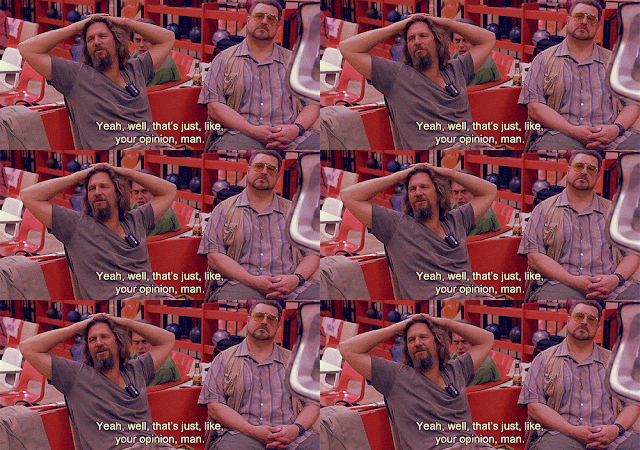
Read that again, please. Slowly. You'll be glad you did then consider The Dude's response to hateful speech (left).
One's opinion is simply that: an opinion. But there are other ways this could unfold, so I give you . . .
A REAL LIFE STORY
Recently someone close did something blatantly wrong and had to be confronted. The person denied any wrongdoing despite the evidence, standing by the flagrant action. Instead of confessing, taking responsibility and showing the least bit of remorse, a response dropped like a bomb into the evening and exploded.
Armed with the words, "I hope you are happy" and "look what you made me do," the offender
aimed to hurt me deeply, an attempt to manipulate me toward guilt and shame. All I could see was how bad the person was actually hurting in the "got caught but not sorry." Add to this, how the offender now offered to add a slew of uncalled-for opinion while we were trying to help.
All because the person did something that seemed right to them at the time. Three times.
Because theft and deception was the heart of the incident, because of false presuppositions coupled with the intense desire to maintain deception, the hurt designed to be inflicted on me instead rolled back on the person and the experience became crushing. All we could do was watch the person grind under the weight of foolish self-imposed false impressions.
The person eventually "saw the light" and came to senses; but the incident began with what seemed right in one's own eyes and ultimately all I could do was think, "well, that happened."
All is well now, but it's amazing watching ancient words come to life before one's eyes.
CONCLUSION
It's easy to fall into the trap of "that's not me, that's the other guy."
Make sure you don't become "that guy" in saying so.
Hurtful thoughts are the same as hurtful actions, committing them in the heart. Should you think something hurtful (and you will), recognize it for what it is, confess it and throw it out.